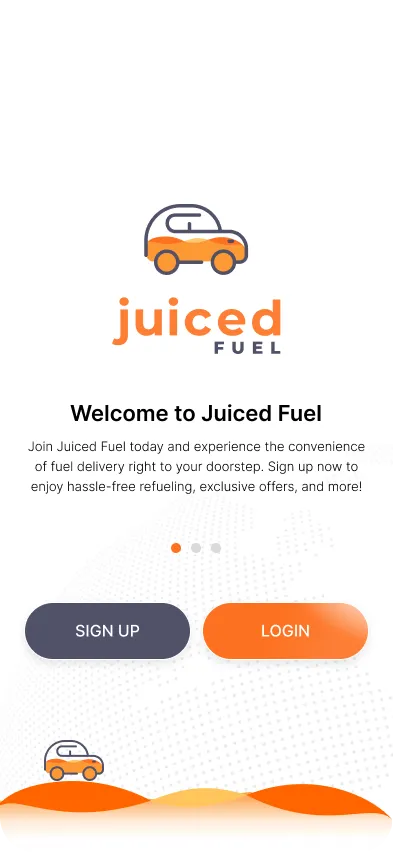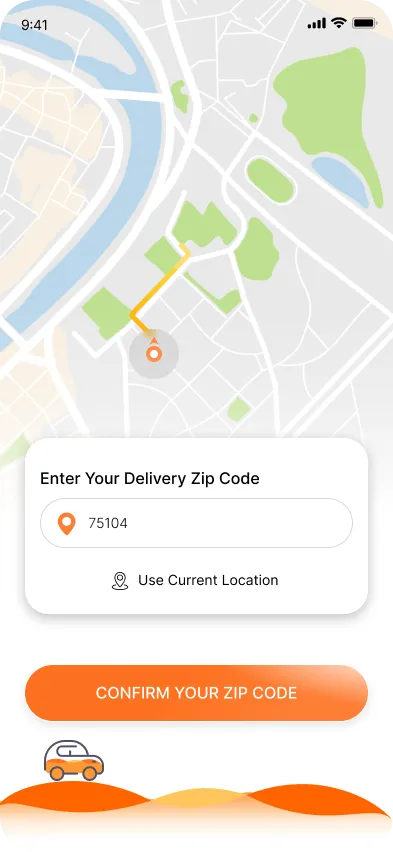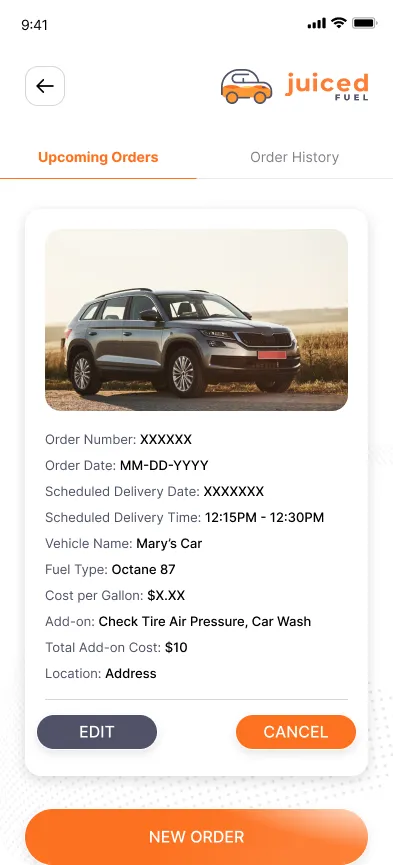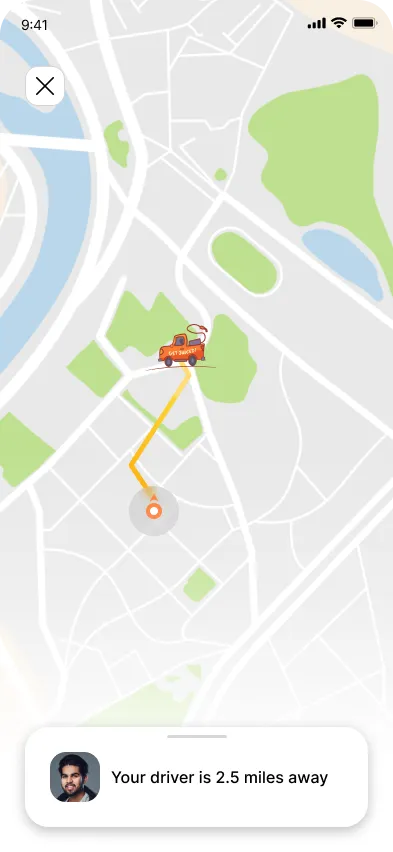



Ready to launch or scale your fuel delivery business?

Fuel Delivery App Development Company for Businesses Ready to Launch, Scale, and Deliver

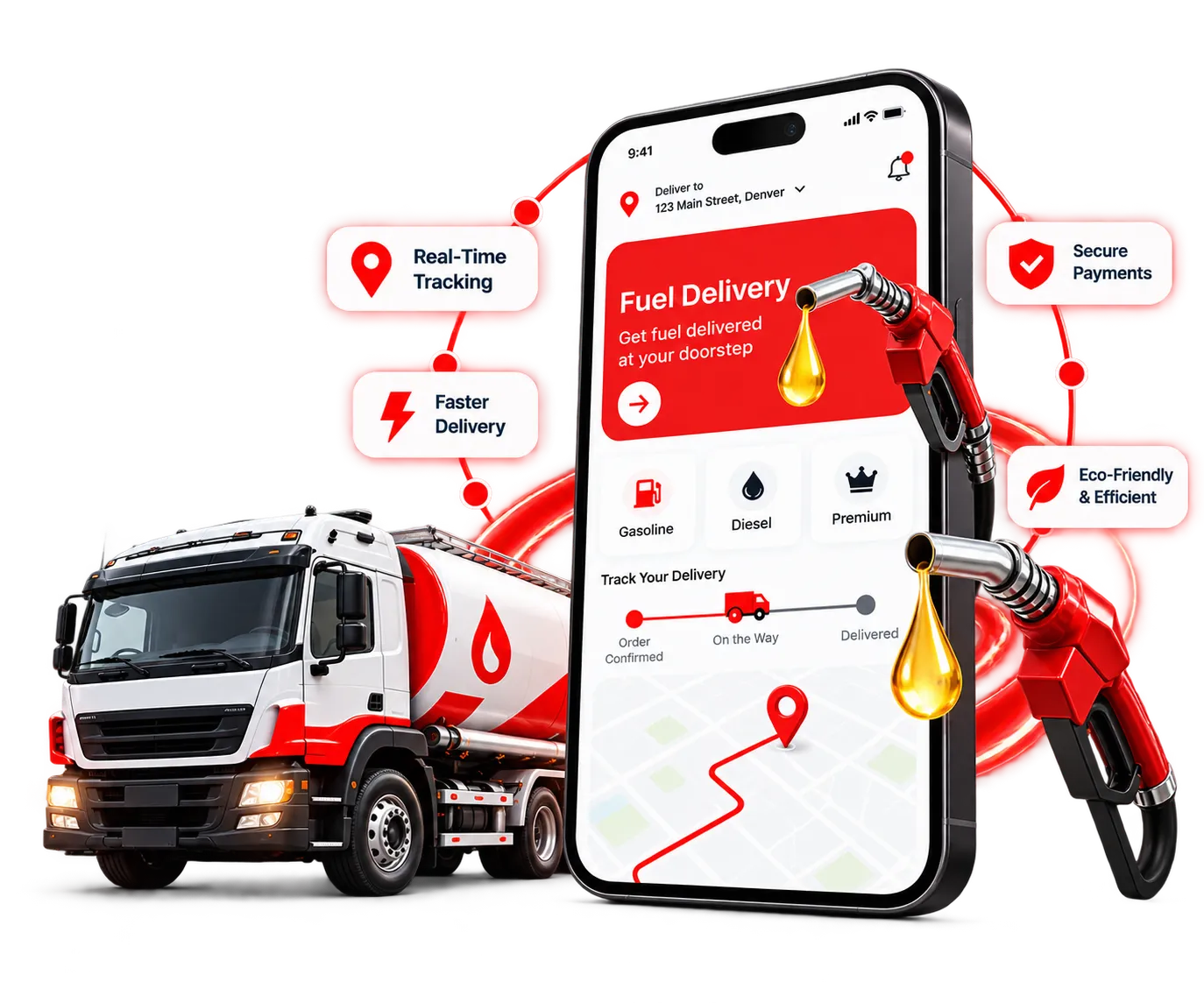
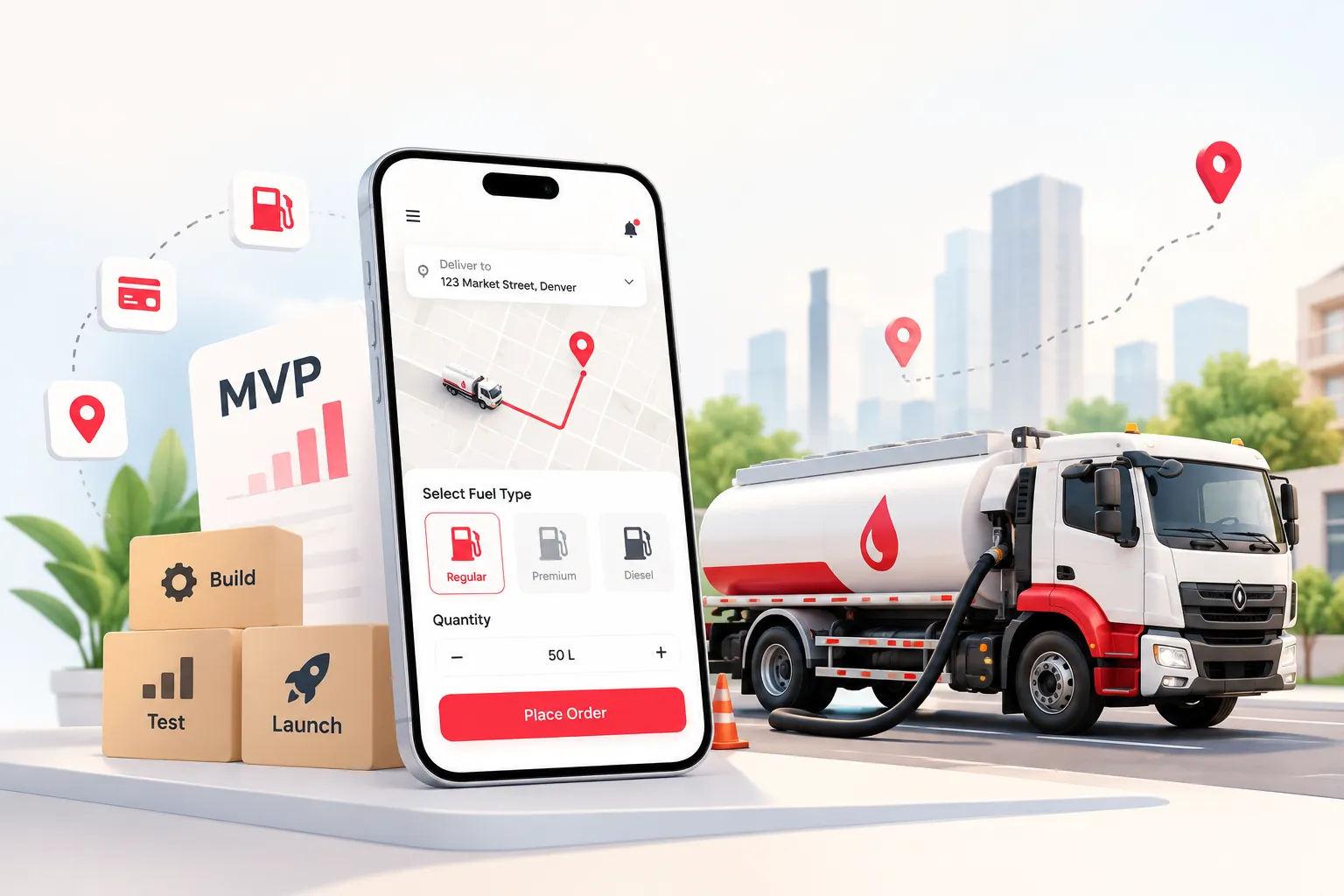
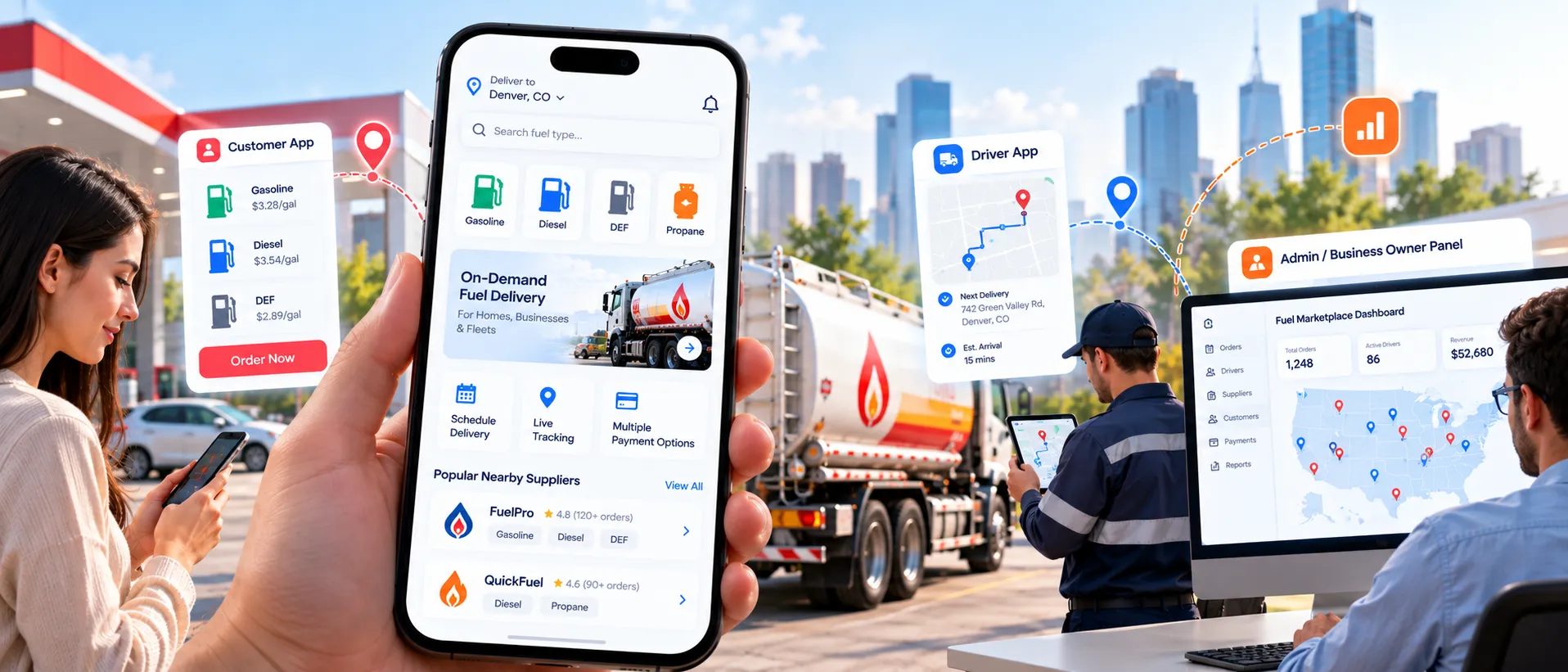
We create unique fuel delivery apps based on your daily business requirements and business model. We connect your entire delivery process into a single app, from ordering fuel and making safe payments to managing deliveries and tracking drivers in real time. We create an app that meets your goals and future expansion plans, whether you are starting with an MVP or replacing outdated software.

Fuel Delivery App Development Company in USA

We are
Trusted by

NikeRed BullWhirlpoolJuiced Fuel

Technology &
Cloud Partners

Microsoft AI Cloud PartnerAWS Partner NetworkSalesforce Partner

Why Is Now the Right Time to Build a Fuel Delivery App?

Demand for doorstep fuel keeps rising. A fuel delivery app helps you take orders, schedule refills, track drivers, and accept payments in one place, so your business can grow faster.

$60.455BGasoline Stations Retail Sales as of July 2026
$11.93BGlobal Fuel Delivery App Market by 2035
7.2% CAGRUSA mobile fuel delivery market by 2035
80%U.S. convenience stores offering motor fuel in 2026

Building a Fuel Delivery Business? Let's Build the Technology Behind It.

Every fuel delivery business has unique technology requirements. We create fuel delivery apps based on your business model, the difficulties you face on a daily basis, and your long-term expansion goals, whether you are launching a startup, improving the efficiency of your current operations, or creating a platform for fleets and various fuel suppliers.

Already Delivering Fuel? Digitize Your Existing Operations.

Are you still coordinating drivers by yourself, handling orders over the phone, or using multiple, overlapping systems? We develop custom fuel delivery software that combines driver tasks, dispatch, customer orders, and delivery tracking on a single platform. It helps you in managing day-to-day operations, reducing repetitive office tasks, and providing more smooth and successful customer service all without requiring you to change procedures or discontinue the use of systems that are already beneficial to your company.

Plan your digitization →
Already Delivering Fuel? Digitize Your Existing Operations

Your Fuel Delivery Business Has Unique Challenges. Your Software Should Solve Them.

Taking orders and delivering fuel to customers is only one part of operating a fuel delivery business. Also, you have to manage drivers, maintain contact with regular customers, and make sure everyday operations run without an issue. Even minor issues with these tasks can result in time waste, higher expenses, and slower business growth. Understanding the Challenges to make a Fuel Delivery App can help identify these issues early. Instead of making things harder or requiring more steps, your software should help you in resolving the issues you face in your day-to-day work.

01

Orders Come In, but Managing Them Takes Too Much Time

Are you still using spreadsheets, messages, or phone calls to handle fuel requests? Organize all of your orders into a single system so that your staff can easily process customer requests, store customer information in one location, and monitor delivery status without constantly looking out information or asking others for updates.

02

Driver Scheduling and Dispatch Get Complicated

Managing delivery locations, assigning drivers, and handling last-minute changes can all contribute to a difficult day. By keeping a clear record of driver assignments, delivery schedules, and order progress, you can simplify dispatching.

03

Customers Keep Asking, “Where Is My Delivery?”

When customers are unable to check the status of their orders, your staff have to spend time responding to their calls and messages. Give customers order tracking and delivery updates so they are aware of the status of their orders and don't need to keep in touch with your staff.

04

Repeat Orders and Business Accounts Are Hard to Manage

Fleet owners and commercial customers may require regular fuel deliveries with various fuel quantities, costs, and billing requirements. With workflows that match to how your customers actually order and pay for fuel, make it simple for them to place repeat orders and manage their business accounts.

05

Your Existing Software Doesn't Fit How You Work

If you have different pricing policies, supplier relationships, reporting requirements, or delivery procedures, ready-made software might not be able to fully meet your business needs. Custom software can be built around the way your business works, while connecting with your existing tools wherever possible.

06

Growth Means More Work Instead of Better Profits

Managing everything with your current procedures can get difficult as your orders, drivers, customers, and service areas grow. Create a platform that will allow your team to do more work, reduce repetitive tasks, and grow your company without requiring manual coordination for every task.

Everything Your Fuel Delivery Platform Needs to Run as One Connected System

You need more than just an order-taking app for your fuel delivery business. Drivers need clear delivery instructions, customers need a simple way to order fuel, and your team must successfully handle daily tasks. We create customized apps and dashboards that promote smooth interaction between drivers, customers, and your team and maintain the success of your entire fuel delivery process.

Customer Fuel Delivery App Development

Customer Fuel Delivery App Development

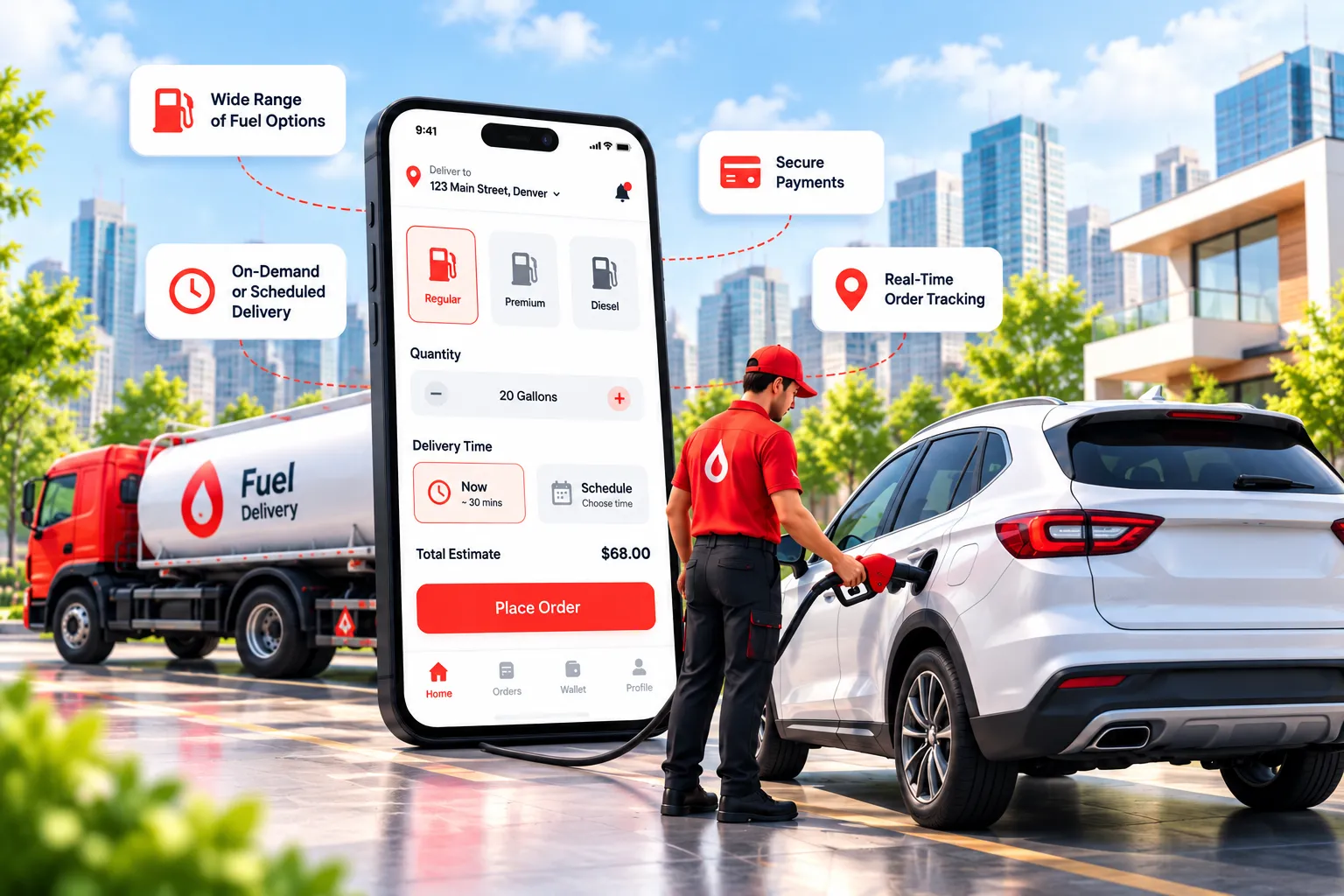
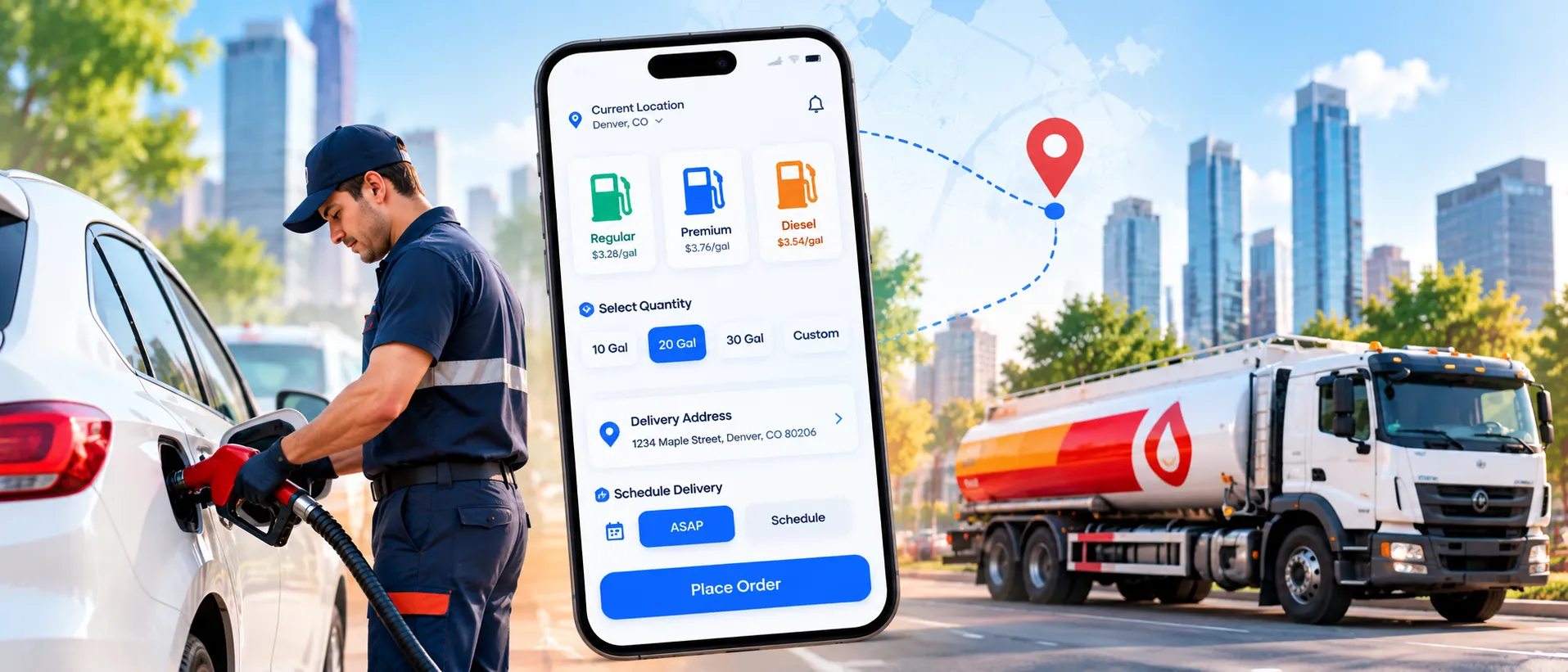
Make it simple for customers to place fuel orders so they won't have to contact your staff each time they require a delivery. We create customer apps that make it easy and convenient for customers to select the kind and quantity of fuel they require, place orders, select a delivery time, and make payments online.

Depending on your business model, your customer app can include:

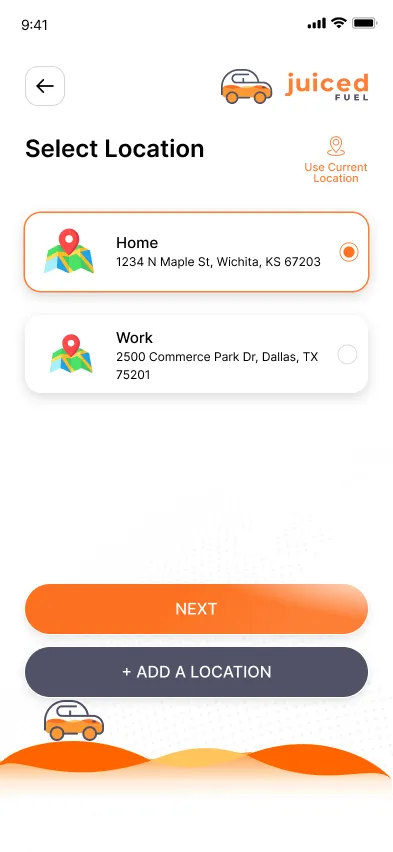
  • Fuel ordering: Let customers select fuel types, quantities, and delivery locations.
  • Flexible scheduling: Allow customers to request immediate or scheduled deliveries.
  • Order tracking: Help customers follow order progress and receive delivery updates.
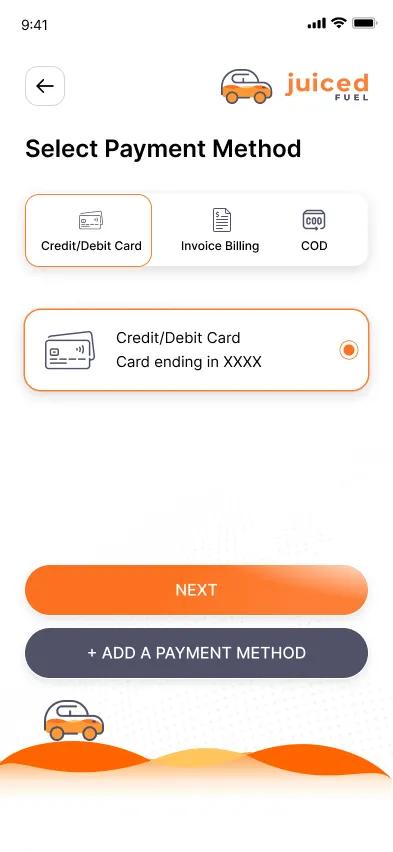
  • Secure payments: Support suitable payment methods and digital receipts.
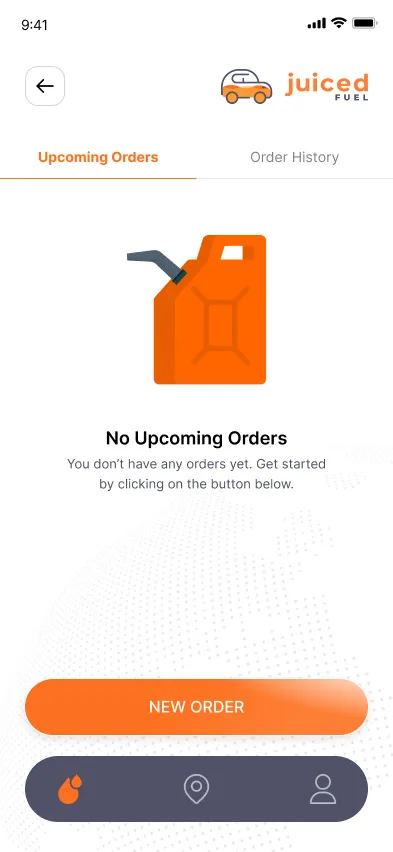
  • Order history: Make it easier for customers to review previous orders and reorder fuel.

Give your customers a smoother ordering experience while reducing the need for manual order handling.

Fuel Delivery Driver App Development

Fuel Delivery Driver App Development

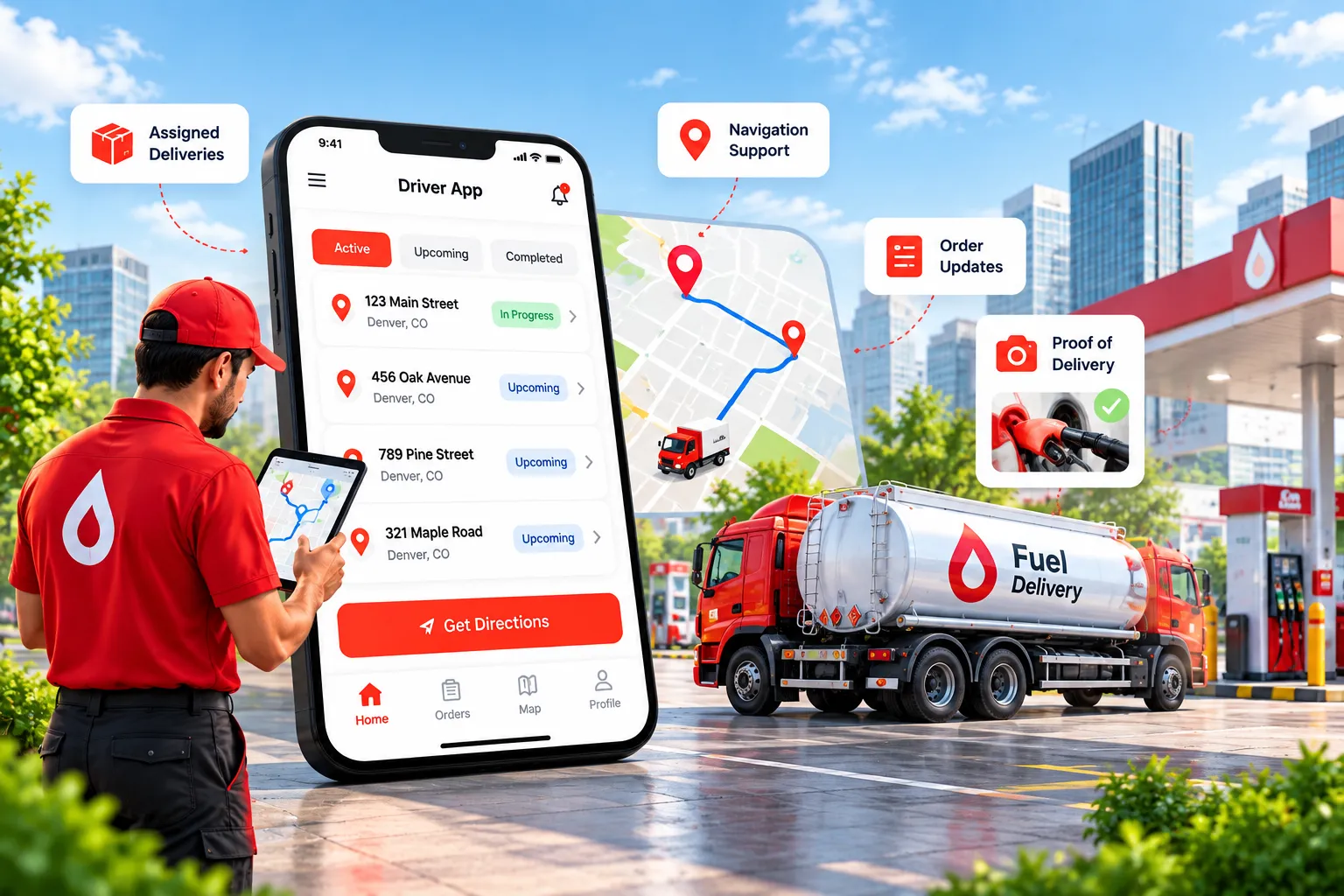
A phone number and address are not enough for your drivers. They require clear instructions, accurate delivery information, and an easy-to-use method of updating order status while traveling. We create driver apps that link your dispatch team and your drivers in the field, allowing them to stay in touch and efficiently handle deliveries.

Your driver app can include:

  • Assigned deliveries: Give drivers access to their delivery schedules and order details.
  • Navigation support: Help drivers find delivery locations using map integrations.
  • Delivery status updates: Let drivers report when an order is accepted, in progress, or completed.
  • Proof of delivery: Capture suitable delivery confirmations, photos, or customer acknowledgments.
  • Order notifications: Keep drivers informed about new assignments and schedule changes.

Help your team coordinate deliveries more clearly and keep office staff informed about what's happening in the field.

Fuel Delivery Dispatch and Admin Dashboard

Fuel Delivery Dispatch and Admin Dashboard

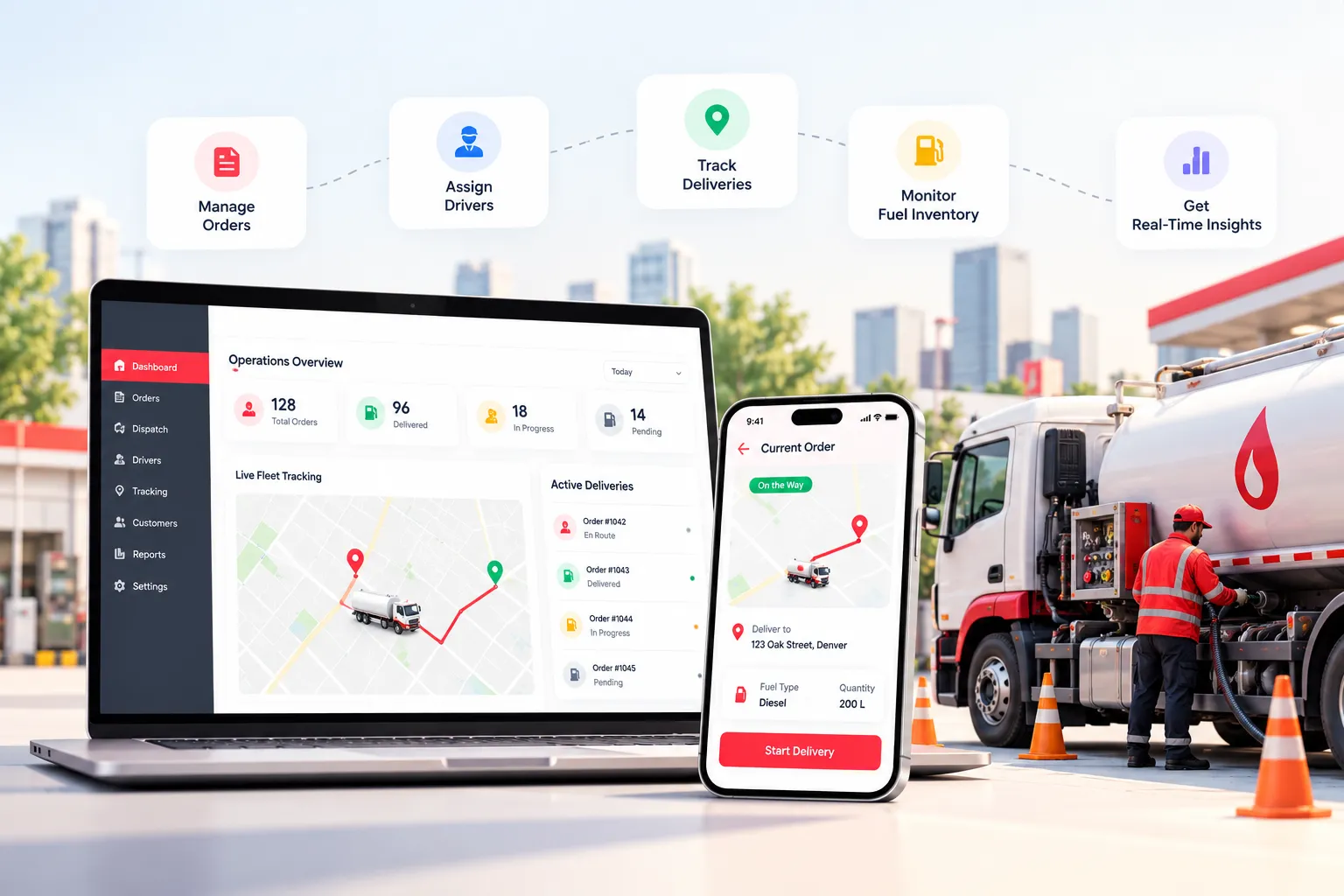
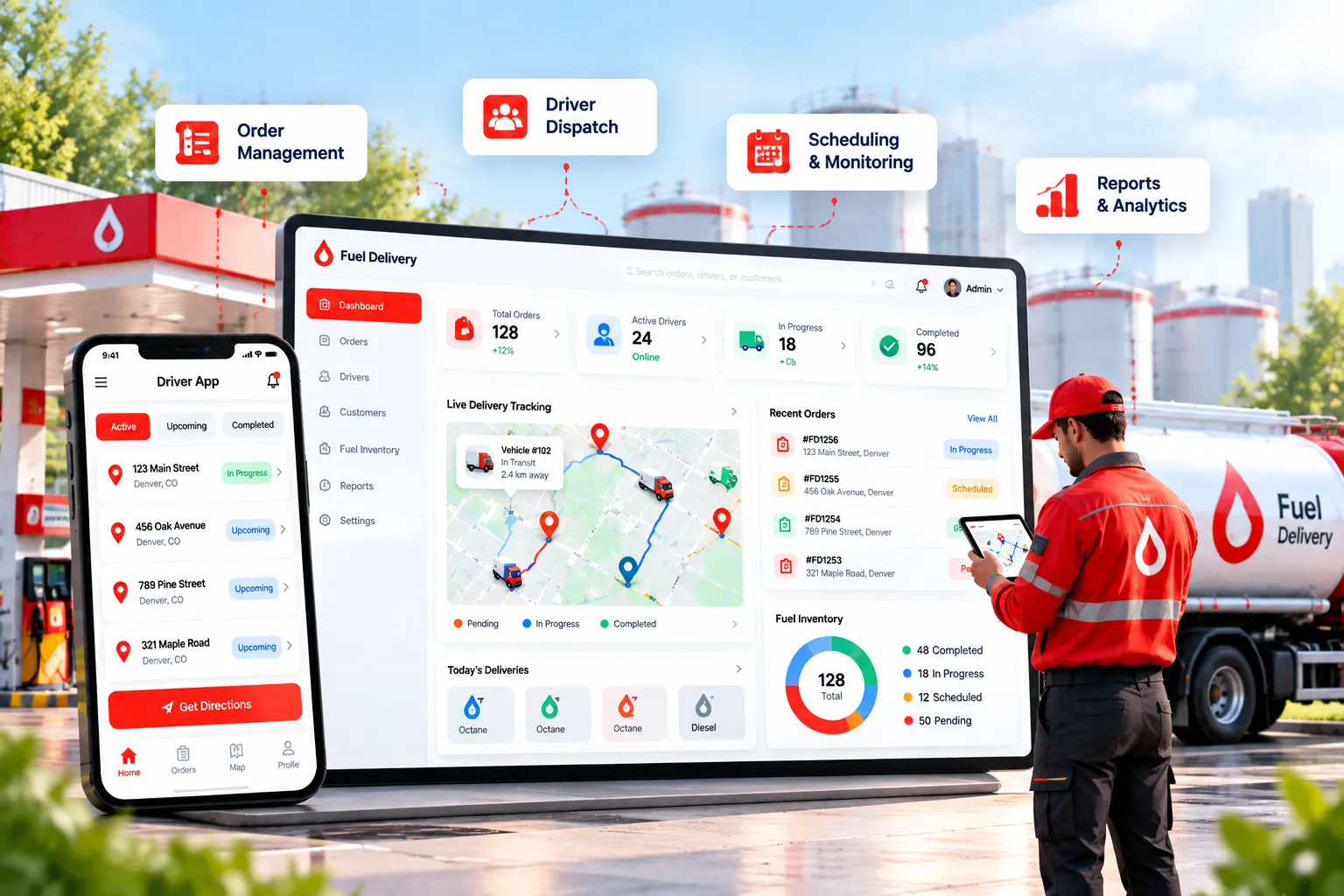
Manually managing drivers, schedules, customers, and delivery updates gets more difficult as the number of orders increases. When plans change, your team needs a single location where they can see what's going on throughout the entire operation and act fast. We create an admin dashboard powered by Automated Fuel Delivery Dispatch Software that works with your team's dispatch and day-to-day operations.

Depending on your requirements, it can include:

  • Order management: View incoming orders, delivery status, and order details.
  • Driver dispatch: Assign deliveries and manage driver availability.
  • Scheduling and monitoring: Track planned deliveries and identify delays.
  • Customer management: Access customer records and order histories.
  • Reports and analytics: Review order volumes, delivery activity, and operational performance.

Give your team better visibility and control without constantly switching between spreadsheets, messages, and disconnected tools.

Fleet Fueling and Business Customer Portal

Fleet Fueling and Business Customer Portal

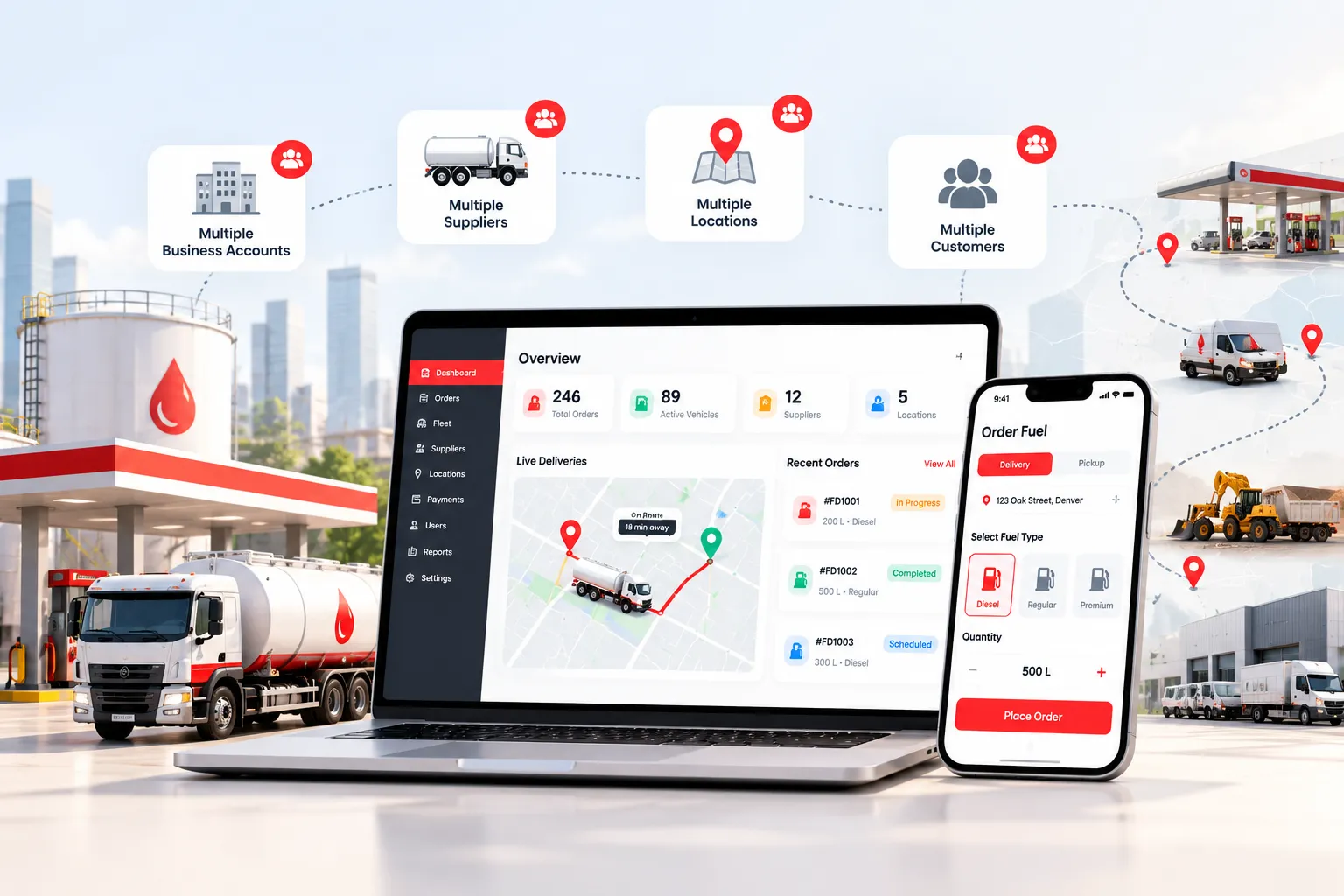
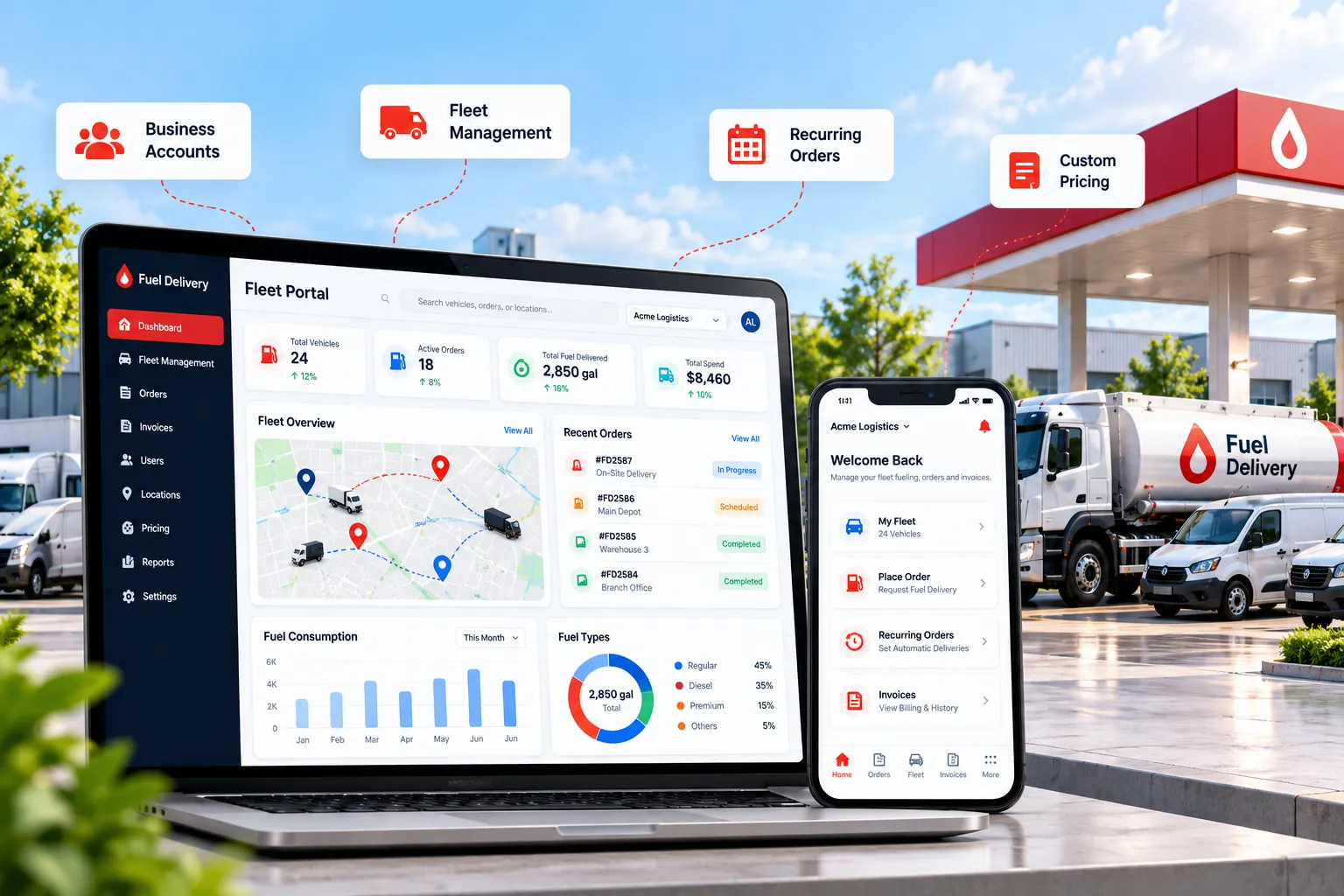
Individual customers frequently have different fuel requirements than commercial fleets and business customers. They might require access for various employees, a single location to handle all of their bills, frequent refueling, and fuel delivery for several vehicles or locations. We create business portals integrated with Fleet Management Systems to meet these requirements, so you can manage commercial accounts more easily and avoid having to manually coordinate each fuel order.

Your portal can include:

  • Business accounts: Manage company profiles, authorized users, and account permissions.
  • Fleet management: Organize vehicles, fueling locations, and fuel requirements.
  • Recurring orders: Schedule repeat deliveries based on business needs.
  • Custom pricing: Apply agreed pricing rules for eligible business accounts.
  • Order and invoice history: Help customers review transactions and billing records.

Support long-term commercial relationships with a more organized fueling experience for both your customers and your team.

Fuel Delivery Software Built Around the Way Your Business Operates

Every fuel delivery business works in a unique way. Different methods of operation are required for delivering propane, refueling business fleets, delivering gasoline to homes, and supplying diesel to commercial locations. We build custom fuel delivery software based on how your business operates, what your customers need, and how you manage your deliveries.

On-Demand Gasoline Delivery App Development

On-Demand Gasoline Delivery App Development

Do you want customers to order gas without calling your staff or visiting a gas station? Customers can easily place orders with an on-demand gas delivery app, which also helps your business handle new requests and deliveries. We create apps according to your business needs, delivery model, and service area.

Depending on your needs, your app can support:

  • Fuel ordering: Let customers select quantities and delivery locations.
  • Delivery scheduling: Support eligible on-demand and scheduled requests.
  • Order tracking: Keep customers informed about delivery progress.
  • Driver dispatch: Help your team assign and manage deliveries.
  • Digital payments: Integrate suitable payment options and receipts.

Build a convenient customer experience while keeping order management and delivery coordination connected behind the scenes.

Commercial Diesel Delivery App Development in USA

Commercial Diesel Delivery App Development

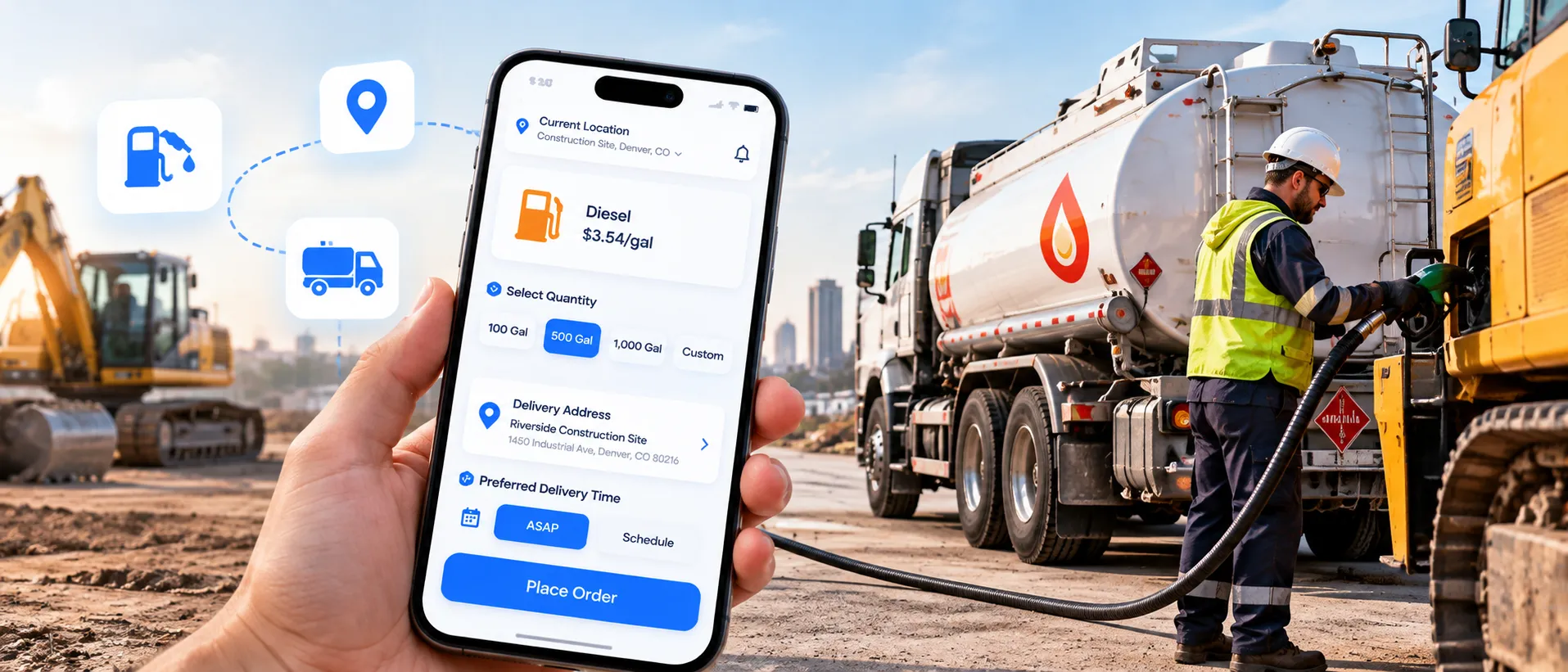
It takes more than a simple ordering app to deliver diesel to farms, construction sites, generators, and business customers. Large fuel orders, deliveries to various locations, handling recurring orders, and scheduling deliveries according to every customer's requirements and everyday operations are all possible tasks for your team. We create diesel delivery software specifically made to manage these responsibilities and fit your business's operations.

Your solution can include:

  • Bulk fuel ordering: Capture diesel quantities and delivery requirements.
  • Site management: Store delivery addresses and site-specific instructions.
  • Recurring deliveries: Organize repeat orders for ongoing fuel demand.
  • Dispatch coordination: Assign drivers and monitor delivery progress.
  • Business account management: Maintain customer records and order histories.

Manage commercial diesel deliveries with workflows designed for business customers, rather than trying to adapt a standard consumer ordering app.

Propane and Heating Oil Delivery App Development in USA

Propane and Heating Oil Delivery App Development

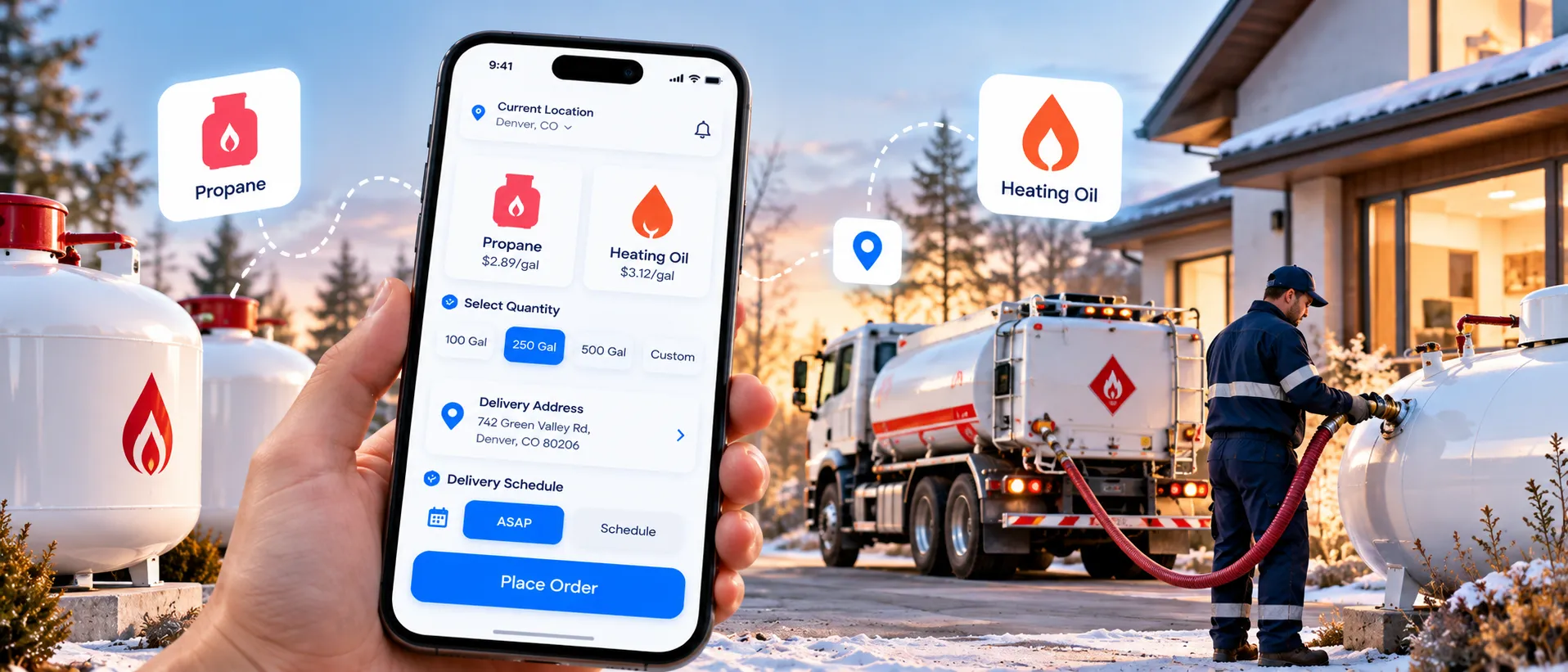
Businesses that deal with propane and heating oil usually deal with seasonal demand, scheduled deliveries, regular customers, and different service requirements depending on each customer's location. While your staff must oversee delivery schedules and respond to shifting customer demands, customers want to know when their next delivery will arrive. We create delivery software that makes it easier for your businesses to handle these responsibilities and serve both residential and commercial customers.

Depending on your operations, features can include:

  • Scheduled and repeat orders: Organize planned fuel deliveries.
  • Customer and property records: Keep addresses and delivery instructions accessible.
  • Delivery reminders: Notify customers about upcoming scheduled deliveries.
  • Route and dispatch management: Coordinate drivers and delivery schedules.
  • Order and payment history: Make customer service and account management easier.

Bring recurring delivery workflows into a connected system built around your service model.

Fleet Fueling and On-Site Refueling Software

Fleet Fueling and On-Site Refueling Software

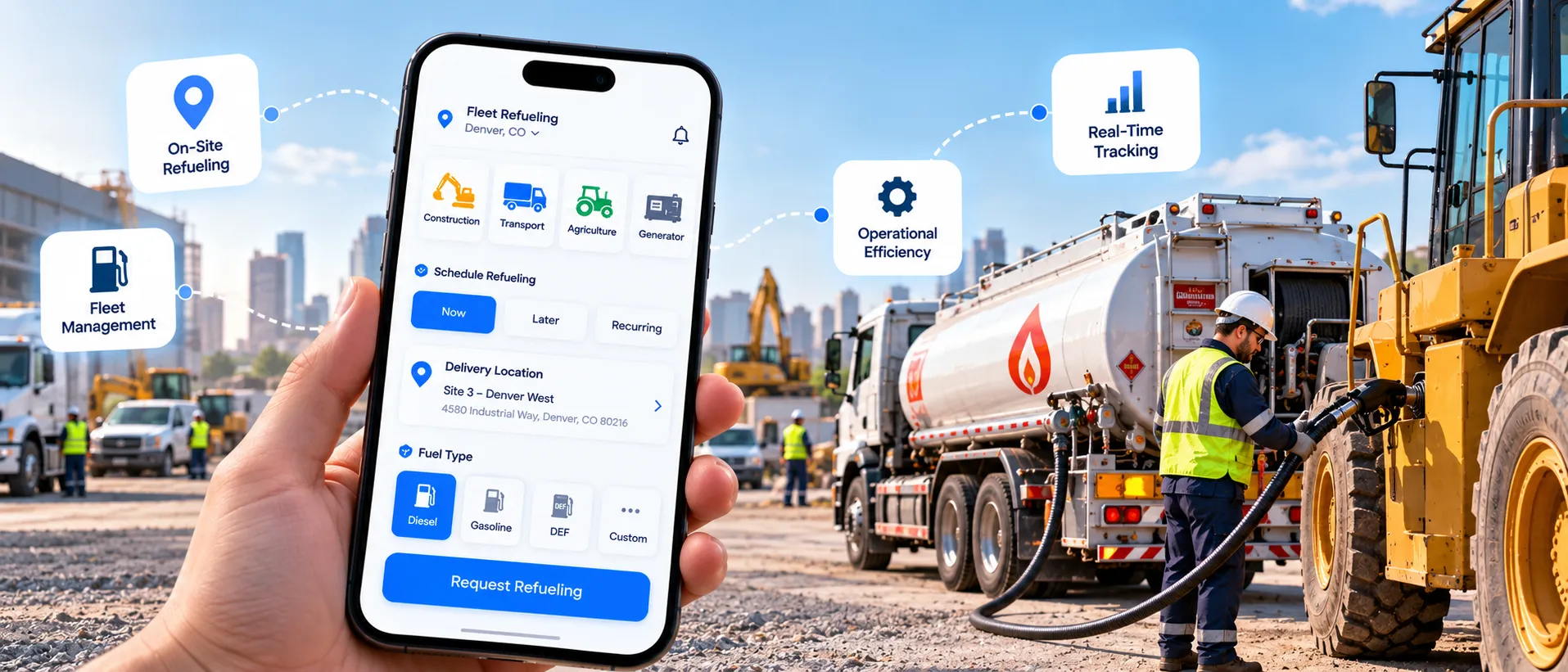
Managing each visit smoothly is important when your business refuels cars, machinery, or commercial fleets at your customer's locations. You might have to manage several locations, schedule fueling, monitor vehicle logs and fuel levels, and verify that every delivery is finished. We develop fleet fueling and on-site refueling software based on the needs of your business customers and how your team operates in the field.

Your platform can support:

  • Fleet and site management: Organize customer locations, vehicles, and equipment.
  • Fueling schedules: Plan repeat visits and scheduled refueling.
  • Driver and technician workflows: Provide assignments and on-site instructions.
  • Fueling records: Track quantities delivered and capture confirmations.
  • Business reporting: Review delivery activity and account history.

Connect scheduling, field teams, and delivery records to help your operation manage fleet fueling with greater visibility.

Fuel Delivery Marketplace and White-Label Solutions

Fuel Delivery Marketplace and White-Label Solutions

Do you plan to create a platform that connects customers, delivery services, and fuel suppliers? Or would you like to launch your own fuel delivery business using your own name? An order-placing app alone is insufficient for both business models. We develop marketplace and white-label solutions based on how your business makes money, manages different participants, and handles fuel delivery orders from start to finish.

Depending on your business model, your solution can include:

  • Multi-vendor management: Onboard and manage participating suppliers or delivery partners.
  • Order allocation: Route requests to suitable providers based on your rules.
  • Platform administration: Manage users, orders, and service activity centrally.
  • Brand customization: Tailor the customer-facing experience to your business identity.
  • Flexible business rules: Configure commissions, pricing, and workflows where required.

Launch with a platform designed around your operating model, with room to expand as your network grows.

Have a Look at How We Build It

Watch this video to see how a fuel delivery app goes from idea to launch. It shows the key steps, from planning and design to development, testing, and release, clearly and simply.

Fuel delivery application product journey video thumbnail

Key Features of Fuel Delivery Solutions

Purpose-built experiences for customers, fuel vendors, and delivery partners—all connected through one scalable platform.

Fuel delivery customer app screens
For fuel customers

Customer App

A user-friendly app designed to make fuel ordering and delivery simple and convenient.

  • ✓Easy User Onboarding
  • ✓Profile Management
  • ✓Live Fuel Price Updates
  • ✓Easy Fuel Ordering
  • ✓Real-Time Order Tracking
  • ✓Multiple Payment Options
  • ✓Order Alerts & Notifications
  • ✓Order History
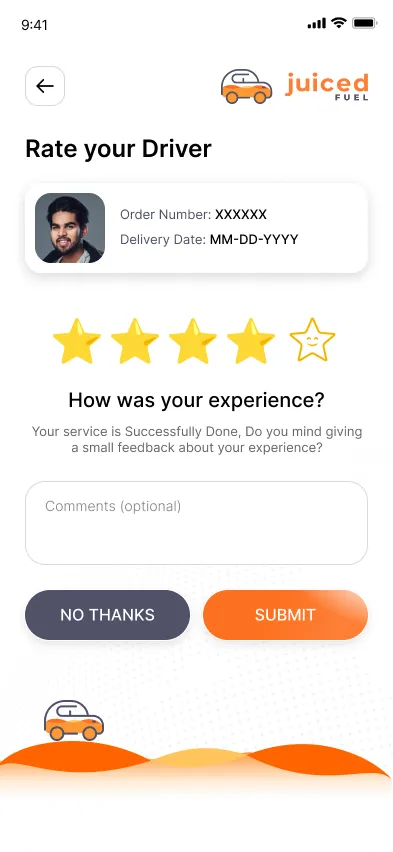
  • ✓Ratings & Reviews
For fuel businesses

Vendor Panel

Manage fuel operations, monitor orders, and gain clear insights into business performance.

  • ✓Vendor Registration
  • ✓Vendor Dashboard
  • ✓Fuel Inventory Management
  • ✓Order Management
  • ✓Fuel Price Updates
  • ✓Earnings Overview
  • ✓Payment Records
  • ✓Alerts & Notifications
  • ✓Delivery Assignment
  • ✓Real-Time Delivery Tracking
  • ✓Sales Reports
Fuel delivery vendor panel screens
Fuel delivery partner app screens
For delivery partners

Delivery App

Simplify fuel deliveries with an easy-to-use app designed for smooth order management and navigation.

  • ✓Profile Setup
  • ✓Order Notifications
  • ✓Route Optimization
  • ✓GPS Navigation
  • ✓Fuel Order Details
  • ✓Delivery Confirmation
  • ✓Earnings Tracking
  • ✓Availability Status
  • ✓Delivery History

Advanced Features of Our Fuel Delivery App Solution

Our fuel delivery app solution includes advanced Features in Fuel Delivery App that simplify daily operations, improve workflow, and support a smooth fuel delivery experience.

Real-Time Fuel Monitoring

Keep customers updated with real-time delivery status throughout the fuel delivery process. GPS-enabled tracking lets users monitor deliveries from dispatch to arrival and stay informed at every stage.

How Much Does It Cost to Develop a Fuel Delivery App in the USA?

Fuel delivery app development costs depend on your business model, features, and customization needs. A basic MVP may cost $25,000 to $45,000, and a mid-level platform ranges from $45,000 to $100,000. A full platform may cost $100,000 to $150,000 or more for complex needs. Learn more about the Cost to build a Fuel Delivery App to understand the estimated development expenses.

What Determines Your Fuel Delivery App Development Cost?

Your cost depends on what you want to build and how your business runs. The main factors are:

App components:

Customer app, driver app, admin dashboard, and business portal.

Features:

Live tracking, repeat orders, automatic dispatch, and fleet management.

Integrations:

Payment gateways, maps, accounting software, or your current business systems.

Complexity:

Custom workflows, many suppliers, and detailed reports.

The more complex your needs, the more time and budget the build will take.

What Does an MVP Cost Compared With a Full Platform?

Estimated custom development costs:

Focused Launch

Basic Fuel Delivery MVP

$25,000–$45,000
Growth Platform

Full-Featured Fuel Delivery Platform

$45,000–$100,000
Enterprise Ecosystem

Complex Enterprise Platform

$100,000–$150,000+

An MVP has only key features needed to launch and test your idea. A full platform supports more workflows, integrations, and growth. These are estimates, not fixed quotes. Final cost depends on the agreed scope.

Custom Development vs. White-Label Software: Which Offers Better Value?

  • White-label solution: Often starts around $5,000 to $35,000, depending on the product, license, setup, and custom changes.
  • Custom development: A custom app may start around $25,000 to $45,000. Larger platforms cost more.

White-label software helps you launch faster at lower cost. White-Label vs Custom Fuel Delivery App development gives you more control over features and workflows. Value depends on whether a ready-made platform fits your business or its limits cost you later.

What Ongoing Costs Should You Budget For?

Development is only a part of your total cost. After launch, plan for these:

  • Hosting and servers: Servers, databases, and data storage.
  • Third-party services: Maps, SMS alerts, and payment processing.
  • Maintenance and support: Bug fixes, security updates, and keeping the app working on new devices.
  • Future upgrades: New features, integrations, and support for more users.

Ask your development partner for a separate estimate of ongoing costs. This shows you both the upfront cost and the cost of running your platform.

From Business Idea to Launch: What Does the Development Timeline Look Like?

You shouldn’t have to wonder what’s happening in your fuel delivery app development project. The work is split into clear stages, from defining needs to launch, so you know what comes next and what can affect your launch date.

Overall timelineA custom fuel delivery platform with medium complexity usually takes 3 to 6 months. A basic MVP may take less time. Marketplaces with many vendors, advanced fleet tools, and complex integrations can take longer.

1.

Discovery and Business Planning

Estimated time: 1 to 2 weeks

The first step is learning your business model, customers, delivery flow, and launch goals. Then the key features, user roles, and integrations are chosen. You get a clear scope and roadmap before the build starts.

2.

UI/UX Design and Prototyping

Estimated time: 2 to 4 weeks

Before development starts, the team maps how customers order fuel, how drivers manage deliveries, and how your team runs operations. Designs and clickable prototypes are shared so you can give feedback early.

3.

App Development and Integrations

Estimated time: 6 to 12+ weeks

This is where approved designs become a working product. The customer app, driver app, admin dashboard, and other agreed parts are built. Depending on scope, payments, maps, alerts, dispatch, and your current systems are connected.

4.

Testing and Refinements

Estimated time: 2 to 4 weeks

Before launch, workflows are tested, including fuel orders, payments, driver assignments, delivery updates, and admin tasks. Issues are fixed, and connected parts are checked together. The goal is a stable release that meets agreed needs.

5.

Launch and Post-Launch Support

Estimated time: 1 to 2 weeks for launch prep

Your app is prepared for release, the live setup is done, and final checks are made. App store approval can vary. After launch, support is available to fix issues and plan upgrades as you grow.

See How We Turn Fuel Delivery Business Requirements Into Working Software

Browse the portfolio to see how business ideas turn into apps that work. These projects show the process, the design choices, and the results, helping you feel sure about choosing the right development team for your next fuel delivery app.

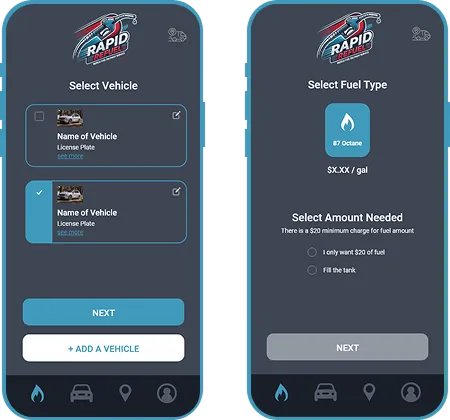
Explore Our Fuel Delivery App Solution Screens

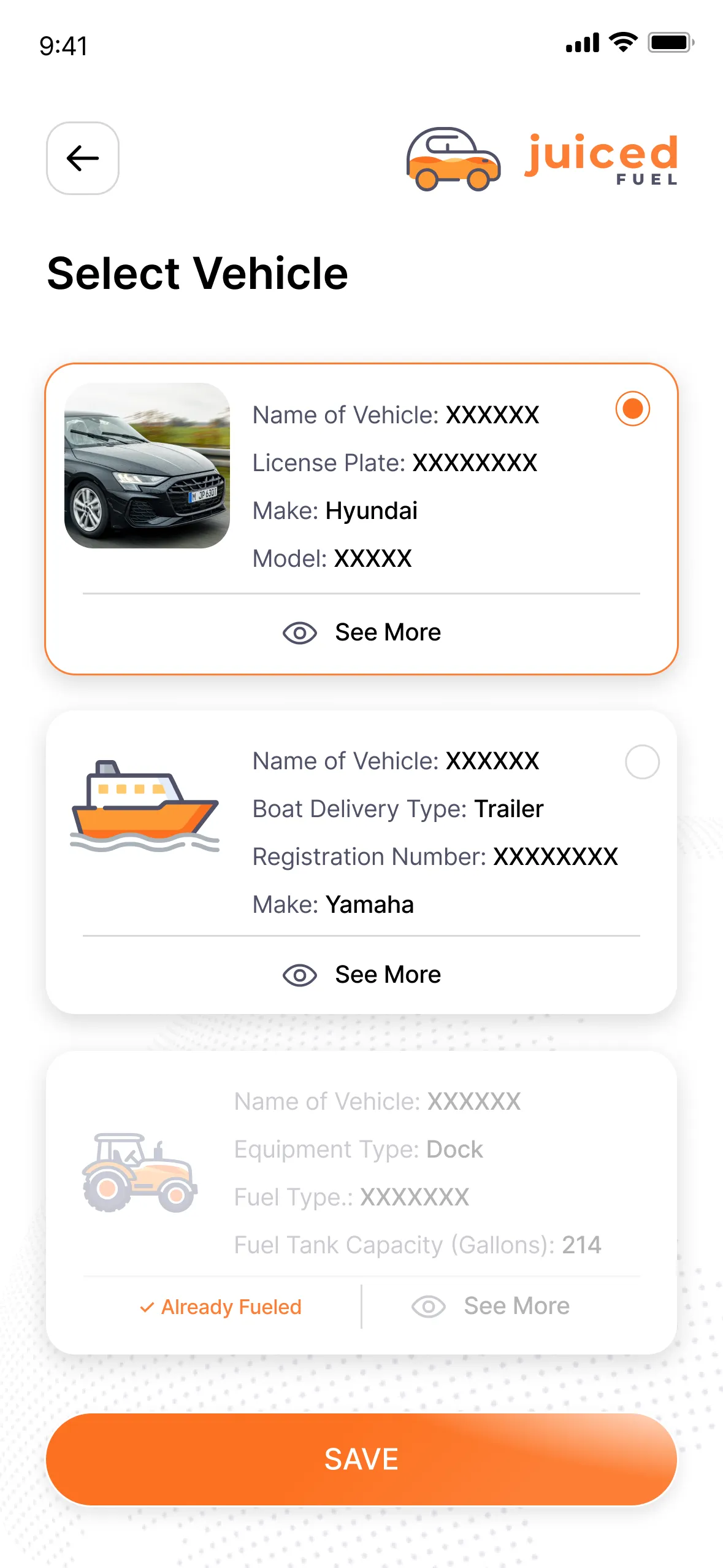
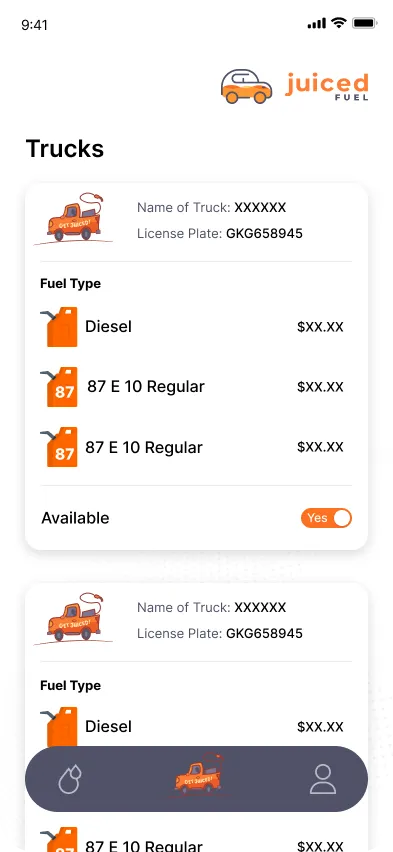
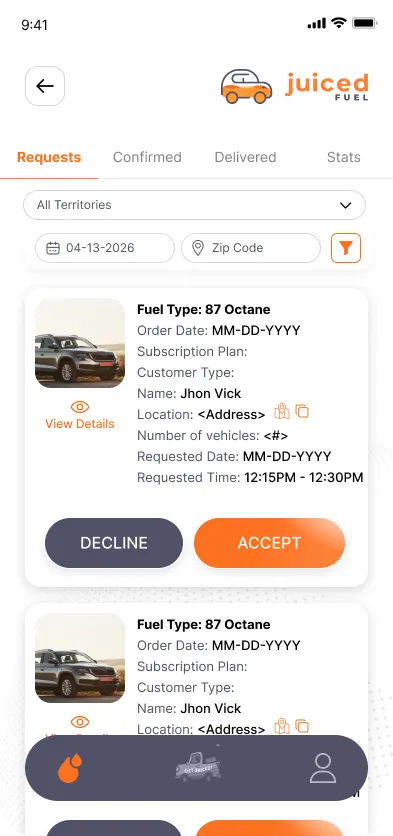
Take a closer look at the intuitive screens designed to simplify fuel ordering, delivery tracking, and overall app navigation.

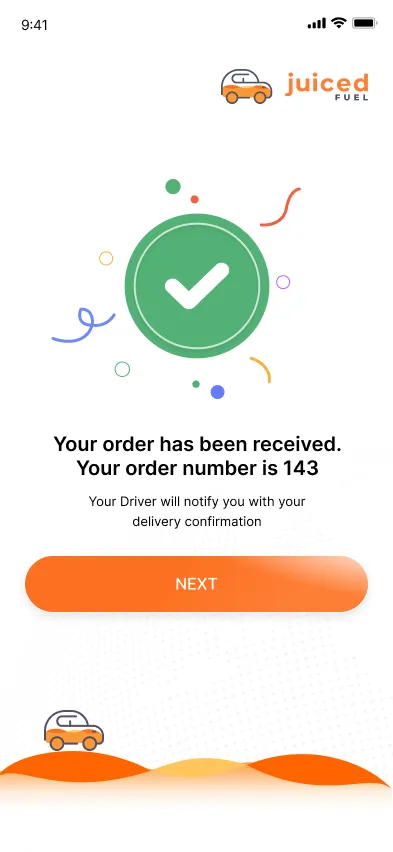
Fuel delivery app screen 1
Fuel delivery app screen 2
Fuel delivery app screen 3
Fuel delivery app screen 4
Fuel delivery app screen 5
Fuel delivery app screen 6
Fuel delivery app screen 7
Fuel delivery app screen 8
Fuel delivery app screen 9
Fuel delivery app screen 11
Fuel delivery app screen 12
Fuel delivery app screen 13
Have a project in mind?

Start Your Fuel Delivery Business With Confidence

Tell us about your business model, current process, service area, and launch goals. We will help you define the right product roadmap.

Questions Fuel Delivery Business Owners Ask Before Choosing a Development Company

A custom MVP may cost $25,000 to $45,000. A full platform may cost $100,000 to $150,000 or more for complex needs. Your final cost depends on your business model, features, integrations, and level of customization. These are planning estimates, not fixed quotes. A clear scope and requirements review helps you get an accurate price for your project.

A custom fuel delivery platform usually takes 2 to 6+ months. The process includes discovery, design, development, testing, and launch preparation. However, marketplaces with many vendors, advanced fleet tools, and complex integrations can take longer. App store approval time can also change your planned launch date.

A fuel delivery app should have easy sign-up, live fuel prices, simple ordering, real-time order tracking, multiple payment options, alerts, order history, and ratings. Drivers need route guidance and delivery confirmation. Admins and vendors need inventory management, order control, earnings reports, and delivery assignment. Add scheduling and fleet tools if you serve repeat or business customers.

Yes. A complete platform can be built from scratch, based on your business model. This includes the customer app, driver app, admin dashboard, and vendor panel. The team also adds payments, maps, alerts, and dispatch workflows. You get a clear scope and roadmap first, so you know what is being built, how long it takes, and what it costs.

Yes. Apps can be built for both iOS and Android, so customers and drivers can use the platform on their phones. You can launch on one platform first to save budget, then add the other later. Cross-platform options can also reduce cost and time. The right choice depends on your users, budget, and launch plan.

Yes, in most cases. Customers, drivers, and admins do different tasks, so each needs its own experience. Customers order fuel, drivers manage deliveries, and admins control orders, pricing, and reports. These can be separate apps or one app with different logins. A small MVP may combine some parts first, then split them as your business grows.

Yes. For an existing fuel business, the app is built around your current delivery process, drivers, pricing, and customer base. It can connect with your dispatch, accounting, and fleet systems. This helps you take orders digitally, reduce manual work, and track deliveries in real time. The goal is to improve your operations without disrupting how your team works today.

Yes. Startups can begin with an MVP that has only the key features, such as ordering, tracking, payments, and driver management. This keeps your cost lower and helps you test demand quickly. After launch, you can add features like subscriptions, fleet tools, and advanced reports based on real user feedback. The roadmap grows as your business grows.

White-label software is a ready-made product that you brand as your own. It often costs about $5,000 to $35,000 and launches faster, but gives you less control. Custom software is built around your workflows and costs more, starting around $25,000 to $45,000 for an MVP. Choose custom if you need unique features, deeper integrations, or room to grow.

Yes. An existing fuel delivery app can be updated to match your needs. This may include new features, a fresh design, better tracking, added payment options, or new integrations. First, the current app and code are reviewed to check quality and limits. Then you get a clear plan on what to keep, improve, or rebuild, so your budget is used well.

Yes. The app can support gasoline, diesel, propane, heating oil, and other fuel types. Each fuel can have its own pricing, units, minimum order size, and delivery rules. You can also set different vehicles, tank limits, and delivery schedules. Some fuels, like propane and heating oil, often need scheduled or repeat deliveries, which the app can handle too.

Yes. Fleet and B2B features can include company accounts, multiple vehicles and drivers, scheduled fueling, bulk orders, invoices, and usage reports. Managers can track fuel use by vehicle and location. Approval workflows and monthly billing can also be added. These tools help fleet managers save time, control costs, and keep vehicles running without trips to a fuel station.

Yes. The platform can support many cities, depots, and service areas. You can set delivery zones, local fuel prices, delivery fees, and driver teams for each location. Admins can view all areas from one dashboard. This setup lets you start in one city, test your model, and expand to new areas without rebuilding the app.

Yes. The platform can connect with payment gateways, map and GPS services, SMS and email alerts, accounting software, and fleet systems. It can also link with your CRM, inventory, or dispatch tools. The right integrations depend on your current systems and goals. A review of your tools at the start helps avoid delays and extra cost later.

Yes. Existing customer details, order history, pricing, and driver records can be moved to the new platform. The data is first reviewed, cleaned, and matched to the new system. Test runs check that nothing is lost or changed. This keeps your business running smoothly and lets your customers continue with their saved details and past orders after the switch.

Security is built in from the start. This includes secure logins, encrypted data, safe payment handling, and role-based access. Before launch, the app goes through functional, performance, usability, and security testing. Bugs are fixed before release. After launch, regular updates and monitoring keep your platform and your customers’ data protected as threats and business needs change.

Fuel delivery is a regulated business. Check federal and state rules for transporting and selling fuel, including hazardous materials, driver licensing, vehicle safety, and fire codes. Local permits and fuel tax rules may also apply. Payment security and data privacy laws matter too. Speak with a legal expert in your state before launch. The app can then support the checks your business needs.

Yes, for custom builds. You own the final source code and the intellectual property created for your project once the agreed terms are met. Third-party tools and licensed software may follow their own terms. Ownership details are written in the contract, and an NDA protects your idea and data, so there are no surprises later.

Yes. Support covers app hosting setup, cloud servers, bug fixes, security updates, and performance checks. Maintenance also keeps the app working with new iOS and Android versions. After launch, new features and upgrades can be added as your user base grows. Ongoing costs are quoted separately, so you can plan your budget for both the build and the running of your platform.

Yes. Starting with an MVP is a smart way to launch fast and test your idea with less risk. The first version can include core features like ordering, payments, tracking, and driver management. Once you see real user behavior, you can add subscriptions, fleet tools, analytics, and more. The app is planned so new features can be added without rebuilding it.

A discovery phase comes first. It usually takes 1 to 2 weeks. Your business model, users, features, and integrations are reviewed together. You then get a clear scope, roadmap, and cost range. If details are still open, the work can be split into phases, so you start with the core features and add more once the requirements are final.

Share your business model, target users, and the problem you want to solve. Also tell the team your must-have features, fuel types, service areas, and any systems you want to connect. Your budget range, launch timeline, and any existing app or documents also help. If you only have an idea, that is fine. A discovery call can help shape the rest.

Yes. You can book a discovery call to see demo screens of the fuel delivery solution and talk about similar projects. This helps you understand the user flow, features, and quality of work before you decide. You can also ask questions about process, timelines, and cost. An NDA can be signed first if you want to share private business details.

Our Latest Tech Blogs

Get the latest updates on development insights, technologies and trends.